
Bone Network ↓
→ Danube River
A genuine attempt to bridge computational archaeology with traditional archaeological methods, using the Danube Corridor (Danube River) as a natural laboratory for understanding how cultural patterns emerge, persist and transform across Eurasia. The parallel development thesis isn’t just plausible → it’s becoming demonstrable through systematic application of AI tools to large archaeological datasets. A legitimate methodological proposal for using computational tools to identify patterns across vast archaeological datasets.
The Danube River → Europe’s Ancient Cultural Corridor The Danube River cuts through the heart of Europe like a silver thread connecting worlds, and along its banks lies evidence of something extraordinary—a network of cultural connections so profound that it challenges our understanding of how ancient civilizations developed. This isn’t merely about archaeological sites scattered along a waterway; it’s about recognizing the Danube as a living corridor where ideas, beliefs, and innovations flowed as continuously as the river itself.
The DKMT Region, where the Danube carves its path through modern-day Romania, Serbia, and Hungary, stands as a crucial node in what we might call the „Bone Network”—not a macabre reference, but rather an acknowledgment of how skeletal remains and burial practices reveal the deepest patterns of human culture. Here, computational archaeology meets traditional excavation methods, and the results are illuminating. By applying AI tools to vast archaeological datasets spanning thousands of years, patterns emerge that would take human researchers lifetimes to discern, patterns that suggest parallel cultural developments across Eurasia weren’t just coincidental but systematic.
In 2023, when Timișoara claimed its mantle as European Capital of Culture, the organizers made a decision that revealed deep historical consciousness. Rather than focusing solely on contemporary art or modern cultural achievements, they chose to showcase the Parta sanctuary, a 7,200-year-old site that represents perhaps the most important cultural vehicle of the entire celebration. This wasn’t nostalgia or provincial pride—it was recognition that the Turdaș-Vinča culture, which flourished along the Danube between 5500 and 5200 BCE, represented something fundamental about European identity.
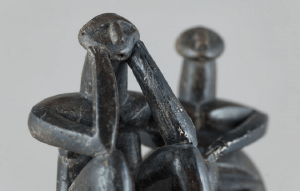
The Parta sanctuary stands as what some scholars have called the first form of organized belief in Europe, a place where Neolithic communities gathered not just for sustenance but for something transcendent. The Turdaș-Vinča culture, named after archaeological sites in Romania and Serbia, developed a sophisticated material culture that included some of Europe’s earliest examples of what might be writing—the famous Vinča symbols that predate Sumerian cuneiform by millennia. These weren’t isolated achievements; they emerged along the Danube corridor, where the river served as both a physical highway and a conduit for ideas.
But the Danube’s story doesn’t begin or end at its own banks. Following the cultural threads eastward, we find ourselves in Anatolia, where sites like Derinkuyu and Çatalhöyük reveal striking parallels with Danubian cultures. Derinkuyu, with its vast underground city carved from soft volcanic rock, speaks to a level of community organization and shared purpose that mirrors the collective efforts evident in Danubian sanctuaries. The site’s multiple levels, ventilation shafts, and communal spaces suggest that by the time these chambers were excavated—likely between 8th and 5th centuries BCE, though the caverns may have been used far earlier—the inhabitants had inherited long traditions of cooperative building and shared defensive strategies.
Çatalhöyük pushes the timeline back even further, to around 7500 BCE, making it contemporary with the early phases of Danubian settlement. Here, archaeologists found something revolutionary: a settlement of perhaps 10,000 people living in adjoined houses entered through roof openings, with no streets but rather a honeycomb of dwellings where interior walls bore elaborate paintings and bull skulls mounted as decoration. The dead were buried beneath the floors where the living slept and ate, maintaining an intimate connection between ancestors and descendants. This practice of honoring the dead within domestic spaces appears, in modified forms, throughout the Danubian corridor, suggesting not direct influence but parallel development of similar solutions to fundamental human needs for meaning and continuity.
The cultural memory preserved at these Anatolian sites reveals communities that valued permanence, collective identity, and symbolic expression—qualities that resonate powerfully with what we find along the Danube. Both regions developed complex pottery traditions, created figurines that seem to embody spiritual or social concepts, and organized their settlements around principles of shared space and collective ritual. The Danube River, flowing from the Black Forest to the Black Sea, connected these Anatolian influences with Central European innovations, creating a corridor where cultural exchange could happen gradually, organically, over generations and centuries.
Following the storytelling corridor even further east, we arrive at something seemingly improbable: ancient China and the Shang Dynasty. Here, thousands of miles from the Danube’s source, we encounter oracle bones—the shoulder blades of oxen and turtle plastrons inscribed with early Chinese characters and used for divination around 1200 BCE. The Shang Dynasty’s capital at Anyang reveals a civilization obsessed with communication between the living and the dead, between earthly rulers and heavenly powers. The oracle bones, heated until they cracked, were interpreted by diviners who read meaning in the patterns of fracture, creating a written record that represents some of humanity’s earliest coherent texts.
What connects these oracle bones to the Danube corridor isn’t direct contact—the distances are too vast, the timelines too separated—but rather the parallel development of using physical materials to bridge the gap between visible and invisible worlds. The Vinča symbols carved into clay along the Danube, the elaborate burial practices of Çatalhöyük, and the Shang oracle bones all represent human communities grappling with the same fundamental questions: How do we preserve memory? How do we communicate with forces beyond our immediate perception? How do we create continuity across generations?
The Danube River becomes, in this framework, more than a geographical feature. It represents a principle—the idea that human culture flows along natural corridors, following paths of least resistance while adapting to local conditions. When computational archaeology analyzes thousands of artifacts from Danubian sites and compares them with materials from Anatolia, the Pontic-Caspian Steppe, and even distant China, patterns emerge that suggest universal human responses to universal human needs. The shape of a vessel, the organization of a settlement, the treatment of the dead—these aren’t random choices but deliberate cultural solutions that developed, sometimes independently, sometimes through contact and exchange, across vast distances.
The genius of using the Danube corridor as a case study lies in its geographical comprehensiveness. The river connects alpine Europe with the Black Sea, crosses multiple climate zones, and has served as a highway for human movement for at least 50,000 years. Every major cultural transition in European prehistory—from Paleolithic to Neolithic, from Bronze Age to Iron Age—left traces along its banks. By systematically applying AI analysis to these archaeological layers, researchers can identify which cultural traits traveled together, which developed independently, and which represented responses to local environmental conditions.
The Parta sanctuary, highlighted during Timișoara’s cultural capital year, exemplifies this approach. At 7,200 years old, it sits at a crucial chronological junction—late enough to show sophisticated Neolithic culture, early enough to preserve practices that would later be transformed or forgotten. The sanctuary’s layout, with its carefully positioned stones and evidence of repeated ritual activity, suggests that Danubian communities had already developed formal religious practices, spaces set aside from domestic life where collective meaning was created and reinforced. This wasn’t primitive superstition but sophisticated social technology, methods for creating group cohesion and transmitting cultural knowledge across generations.
When we trace cultural memory from the Danube to Derinkuyu’s underground chambers, we’re following a thread of human ingenuity that found different expressions in different environments. The soft volcanic tuff of Cappadocia allowed for excavation in ways that Danubian geology didn’t, but the impulse—to create protected spaces for community gathering—remained constant. Similarly, Çatalhöyük’s densely packed settlement pattern, with houses sharing walls and roofs serving as streets, represents a different architectural solution than Danubian longhouses, but both addressed the same need for security and social cohesion.
The Shang Dynasty’s oracle bones, meanwhile, show how the preservation of cultural memory could evolve into systematic record-keeping. The questions inscribed on these bones—about harvests, military campaigns, royal health—reveal a society that had institutionalized the practice of consulting ancestors and recording the results. This represents a quantum leap from the symbolic expressions of Neolithic Europe, yet it shares the fundamental assumption that meaning could be encoded in physical materials and that these materials could serve as bridges between present and past, human and divine.
The Danube corridor methodology being developed through computational archaeology offers a way to test these connections rigorously. Rather than relying on suggestive similarities or scholarly intuition, AI analysis can process thousands of data points—pottery styles, settlement patterns, burial practices, artifact distributions—and identify correlations that might escape human notice. When similar patterns appear in regions separated by vast distances, we can begin to ask more sophisticated questions: Is this parallel development driven by similar environmental conditions? Is it evidence of cultural contact through trade networks? Or does it suggest something even more fundamental about human cognitive patterns and social organization?
The evidence increasingly points toward all three mechanisms working simultaneously. The Danube River facilitated direct cultural exchange along its length, creating a zone where innovations could spread relatively quickly from the Black Forest to the Black Sea. But the river also connected to broader networks—overland trade routes to Anatolia, maritime connections across the Mediterranean, eventually even tentative contacts with steppe cultures that would themselves connect, over centuries, to distant China. At each node in these networks, local communities adapted foreign innovations to local conditions, creating variations on shared themes.
What emerged along the Danube wasn’t a single unified culture but rather a family of related cultures, bound together by geography and sustained exchange. The Turdaș-Vinča culture represents one particularly successful adaptation within this family, developing distinctive pottery styles, early symbolic systems, and architectural forms that would influence its neighbors while remaining responsive to local conditions. The Parta sanctuary shows this culture at a moment of consolidation, when scattered Neolithic farming communities had achieved sufficient stability to invest resources in permanent ritual architecture.
This pattern of consolidation and elaboration appears throughout the connected regions. Çatalhöyük represents a similar moment in Anatolian prehistory, when communities achieved the demographic density and social organization necessary to create a proto-urban settlement. The elaborate symbolic systems evident in the site’s art and burial practices suggest that religious or ideological frameworks had developed to manage the complexities of living in such close quarters with hundreds or thousands of neighbors. These frameworks, encoded in shared symbols and repeated rituals, created cultural continuity even as specific communities rose and fell.
The Shang Dynasty’s oracle bone inscriptions reveal a further evolution of this pattern—the emergence of writing systems sophisticated enough to record not just symbolic concepts but specific historical events, names, dates and decisions. The questions posed to the oracle bones show a society concerned with practical governance, military strategy, and agricultural planning, yet conducted through ritual consultation with ancestral spirits. This fusion of practical administration and spiritual practice represents a mature form of the cultural patterns first visible in Neolithic Europe and Anatolia, where communities sought to anchor present decisions in transcendent meaning.
The storytelling corridor that runs from the Danube through Anatolia to ancient China isn’t a single highway but rather a network of intersecting paths, each segment developing its own character while maintaining connections to adjacent regions. The Danube River serves as an ideal focal point for studying this network because it offers both continuity—millennia of continuous settlement and cultural development—and diversity, with numerous distinct cultures rising and falling along its banks while maintaining enough connection for ideas and innovations to spread.
Computational archaeology’s contribution to understanding this corridor lies in its ability to process complexity at scale. A human researcher might notice similarities between Vinča pottery and Anatolian ceramics, but quantifying those similarities across thousands of samples, tracking their distribution over time, and comparing them with dozens of other cultural markers requires computational power. AI tools can identify subtle gradients in style and technique that reveal patterns of influence and exchange invisible to the naked eye. They can track the spread of specific technological innovations—like copper metallurgy or wheel-thrown pottery—and map their diffusion along trade routes and river valleys.
The parallel development thesis, which suggests that human communities separated by vast distances often develop similar cultural solutions to similar challenges, finds strong support in this computational approach. When we see similar patterns of settlement organization in the Danube valley and the Yellow River valley, for instance, we can now quantify those similarities and test whether they likely result from contact, parallel development, or random chance. The mathematical precision of these analyses doesn’t diminish the human story—it enriches it by revealing just how systematic and sophisticated ancient cultural developments actually were.
The Danube River, flowing through this analysis, emerges not as a passive backdrop but as an active agent in cultural history. Its seasonal floods deposited fertile silt that enabled agricultural surplus, supporting larger populations and social complexity. Its navigable waters connected distant communities, allowing trade goods and cultural innovations to spread. Its floodplains and terraces provided diverse ecological niches where different subsistence strategies could develop side by side, fostering cultural diversity while maintaining geographical proximity. The river created a laboratory for cultural evolution, and the archaeological record preserves the results of millennia of experimentation.
When Timișoara chose to center its European Capital of Culture celebration on the Parta sanctuary, it was making a statement about cultural continuity that resonates far beyond local pride. The sanctuary represents a point on a vast network of cultural connections, a node where Danubian innovations intersected with broader Eurasian patterns. By highlighting this ancient site, the celebration acknowledged that European culture didn’t begin with Greece and Rome but has roots extending back into a Neolithic past characterized by sophisticated symbolic thought, complex social organization, and far-reaching cultural exchange.
The journey from Parta to Derinkuyu to the Shang oracle bones traces a path through different expressions of fundamental human impulses—the need to create meaning, preserve memory and connect present communities with ancestral wisdom. The Danube River, as both physical waterway and conceptual corridor, provides the thread that ties these expressions together, demonstrating that cultural development has always been a network phenomenon, with ideas flowing along natural corridors and jumping across apparent barriers to find expression in distant communities facing similar challenges.
This understanding transforms how we approach archaeological evidence and cultural history. Rather than seeing ancient cultures as isolated islands of development, occasionally making contact through trade or conquest, we can recognize them as nodes in extensive networks of exchange and influence. The Danube corridor, studied with both traditional archaeological methods and cutting-edge computational tools, reveals the density and complexity of these networks, showing how cultural innovations could spread from the Black Forest to the Black Sea, from the Carpathians to the Taurus Mountains, from the Balkans to the distant shores of Bronze Age China.
The bone network, that web of cultural connections revealed through skeletal remains and burial practices, serves as a metaphor for these deeper patterns. Just as bones provide the structural framework that allows bodies to move and function, these cultural connections provided the framework that allowed ideas, technologies, and symbolic systems to spread and transform across Eurasia. The Danube River, flowing through the heart of this network, carried not just water but the currents of human cultural evolution, connecting Europe and Asia in a dialogue that began in the Neolithic and continues, in transformed ways, to the present day. Daniel ROȘCA
A bridge between Europe and Asia ↓
→ DKMT Region → HUNEDOARA.