
Zhou Dynasty
& Fu Xi (伏羲)
Fu Xi: The Mythic Foundation
The Mythic Origins & Historical Reality
of Zhou Dynasty Ancestral Preservation
The origins of the Zhou dynasty, one of the most influential periods in Chinese history, blend mythological tradition with archaeological evidence, forming a complex narrative about the rise of a power that shaped China’s culture, politics and spirituality for more than eight centuries. And although early accounts are interwoven with legend, what follows is not imaginative reconstruction, but a synthesis grounded in established research and credible historical evidence.
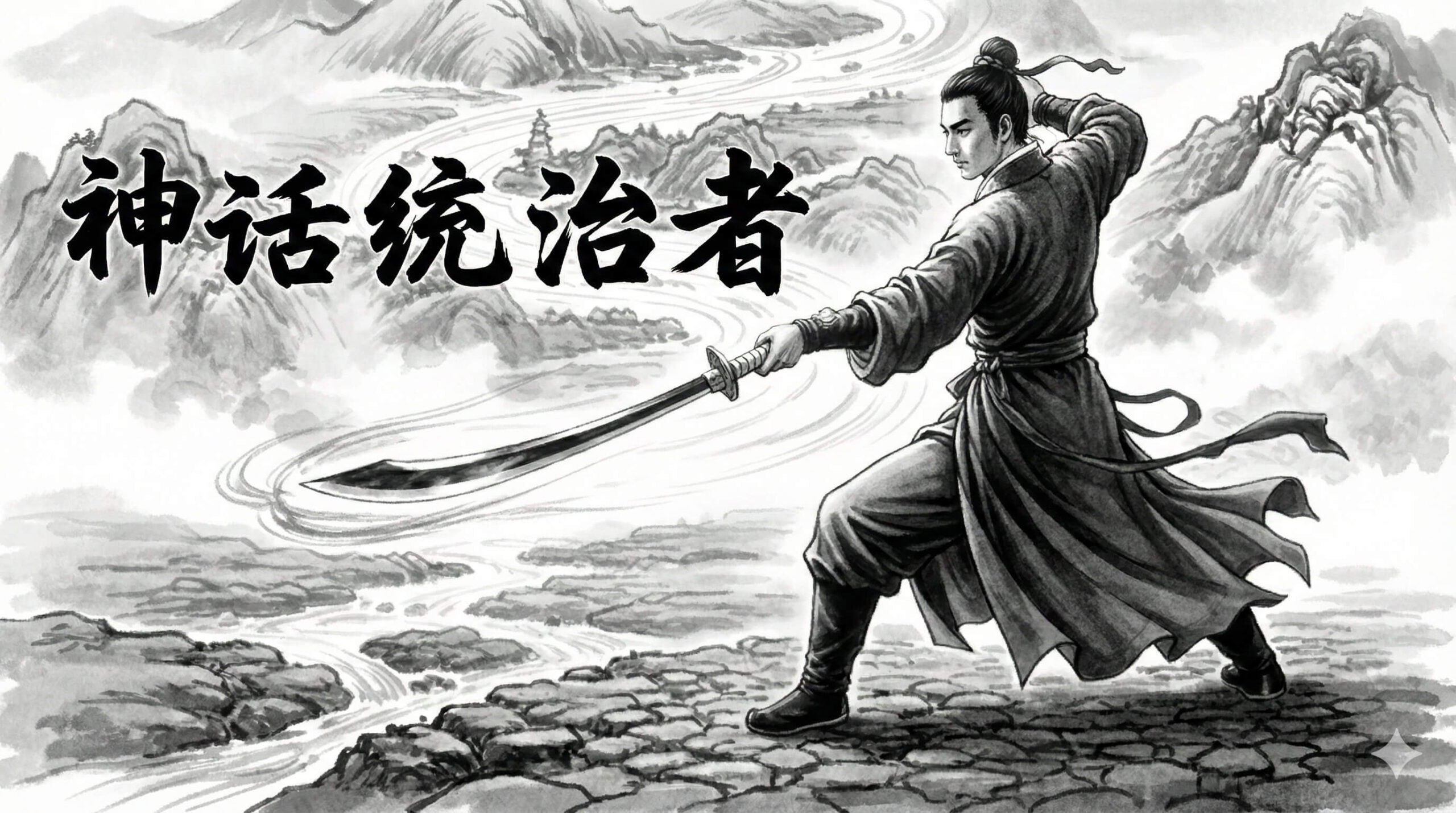
Fu Xi occupies a unique space in Chinese consciousness—part deity, part cultural hero, often depicted with a human upper body and serpentine lower half. According to ancient traditions, he lived sometime around 2800 BCE, though his existence is shrouded in myth rather than historical record. The legends credit him with extraordinary gifts to humanity.
He taught people to hunt, fish and domesticate animals, transforming them from gatherers into providers. Most significantly, he is said to have created the eight trigrams (bagua) that form the basis of the I Ching (Book of Changes), giving humanity a system to understand the cosmos itself. He invented cooking, introduced marriage customs, and established the earliest forms of ritual propriety that would later become central to Chinese civilization.
In the mythic imagination, Fu Xi represents the moment when humans moved from chaos to order, from animal existence to civilized life. His teaching of proper sacrifice and ancestral veneration would echo through millennia.
The Zhou Conquest and
the Mandate of Heaven
Fast forward to 1046 BCE, when King Wu of Zhou overthrew the Shang Dynasty’s last ruler, the reportedly tyrannical King Zhou. This wasn’t merely a military conquest—it represented a cosmic realignment. The Zhou justified their rebellion through a revolutionary concept: the Mandate of Heaven (tianming). Heaven itself, they proclaimed, had withdrawn its blessing from the corrupt Shang and bestowed it upon the virtuous Zhou.
This political theology had profound implications. If Heaven granted legitimacy based on virtue rather than heredity alone, then ancestors became more than just family—they became cosmic witnesses and intermediaries. The Zhou rulers understood that their mandate required constant moral vigilance, demonstrated through proper ritual conduct. The origins of the Zhou dynasty, one of the most influential periods in Chinese history, represent a complex interplay between myth and history. While traditional legends describe figures such as Hou Ji, the “Lord of Millet,” as foundational ancestors who introduced agriculture and divine favor to the clan, archaeological and textual evidence paints a more concrete picture of the Zhou’s rise. The dynasty’s emergence in the Wei River Valley, its conquest of the Shang, and the establishment of political, social and ritual institutions mark the transition from legendary narrative to historical reality.
Although early accounts are deeply interwoven with legend, this article focuses on verifiable evidence and established scholarship. By distinguishing between symbolic myth, ancestral tradition, and historical fact, we aim to provide a coherent account of the Zhou dynasty’s origins, political consolidation, and cultural legacy. The discussion emphasizes both the dynasty’s historical achievements and the enduring influence of its mythological framework on subsequent Chinese thought and governance.
The Bronze Edicts: Words Cast in Metal.
The Zhou Dynasty left us remarkable artifacts: bronze vessels inscribed with lengthy texts documenting royal decrees, land grants, military appointments, and ritual obligations. These weren’t merely decorative—they were legal records, historical documents, and sacred objects all at once. Many of these bronzes were explicitly designated for ancestral temples and ritual feasts. The inscriptions often conclude with phrases indicating the vessel was cast „to use in offering to [ancestor’s name]” or „for use in the ancestral temple for ten thousand years.”
The vessels themselves—ding cauldrons, gui food containers, zun wine vessels—were the instruments of communication between the living and the dead. One famous example is the Da Yu Ding (Great Yu Cauldron), which records King Kang’s charge to a nobleman named Yu.
The inscription details Yu’s military achievements and the rewards granted to him, then specifies that he has cast this magnificent vessel „to honor my accomplished ancestor” and to use in ancestral sacrifices. The bronze itself becomes a permanent record, a ritual tool, and a family treasure simultaneously.
The Ancestral Feast: where
past and present meet 伏羲
The Zhou ancestral feasts were elaborate ceremonies of staggering complexity. Held in specially constructed temple halls, they involved – preparation: days of ritual purification, fasting and spiritual preparation for the living participants. The ancestors’ spirit tablets would be cleaned and prepared. The Offering Cooked meats, grains, wines and fruits were meticulously arranged in bronze vessels. Each type of food had its proper vessel; each vessel had its proper placement. The hierarchy of ancestors determined the scale of offerings.
The Invocation Specially trained priests or family elders would call upon the ancestors, inviting their spirits to descend and partake. Music played on bells, drums, and stone chimes accompanied these invocations. The Feast The living family members would then consume portions of the food, creating communion between worlds. By eating what had been offered to the ancestors, they literally incorporated the ancestral presence into their own bodies.
Connecting Fu Xi
to Zhou Practice
(visionary thinking)
The Zhou saw themselves not as innovators but as preservers of ancient wisdom. They explicitly claimed to be restoring the proper order established by the sage-kings of antiquity—and Fu Xi stood at the head of this lineage.
The Zhou ritual texts, particularly those that would later be compiled into classics like the Book of Rites (Liji), traced the origins of ancestral sacrifice back to Fu Xi. He was credited with establishing the fundamental principle that humans must honor those who came before, that the living owe a debt to the dead, and that this debt is repaid through ritual feeding and remembrance. When Zhou bronze inscriptions invoke „the former kings” or „the ancient sages,” they’re reaching back to figures like Fu Xi. When they cast vessels for „ten thousand generations,” they’re attempting to create objects worthy of a tradition stretching back to humanity’s mythic dawn. The eight trigrams attributed to Fu Xi also appear on some Zhou bronzes and jade objects, symbolically connecting the dynasty’s ritual practices to cosmic patterns established at the beginning of time.
The Living Tradition
What makes this story remarkable is its endurance. The Zhou Dynasty’s ritual system, which they claimed inherited from Fu Xi and the sage-kings, became the foundation of Chinese civilization for the next three millennia. Confucius himself, living 500 years after the Zhou conquest, would declare „I follow Zhou” and dedicate his life to preserving and interpreting these very traditions. The bronze vessels commissioned for ancestral feasts have survived—thousands of them, bearing their inscribed edicts, now in museums worldwide. They remain evidence of a civilization that believed the dead were not gone but present, not powerless but influential, and that proper ritual could maintain harmony between heaven, earth, ancestors, and descendants. In this way, the mythic teaching of Fu Xi and the historical practice of the Zhou became inseparable, forming a unified narrative: humanity learned civilization from the gods and heroes, and we maintain that civilization by remembering and feeding those who taught us.