
The Cave That Whispers ↓ 1/Φ
Across Millennia → 11.000 B.C.
Cultural Entanglement → a concept used mainly in anthropology, archaeology and postcolonial studies to describe what happens when different cultures come into contact and become deeply intertwined, shaping each other in complex, ongoing ways.
Core Idea → Rather than cultures simply borrowing from one another or one culture replacing another, cultural entanglement emphasizes mutual influence, power dynamics and hybridity over time.
Key Features → Interdependence: Cultural practices, objects, languages and beliefs become linked and can’t be understood in isolation. Asymmetry of power: Entanglement often occurs in unequal contexts (e.g., colonialism, trade empires), where one group may dominate but still be transformed. Hybrid outcomes: New cultural forms emerge—neither purely “local” nor purely “foreign.” Ongoing process: Entanglement is not a one-time event; it evolves across generations.
Example → In colonial contexts, Indigenous societies might adopt European tools or religion, but reinterpret them through local traditions—while colonizers simultaneously adapt to local foods, clothing or knowledge systems. A modern example is global cuisine: dishes like curry in Britain or tacos in the U.S. are products of long-term cultural entanglement, not simple cultural transfer.
How it differs from related ideas → Cultural diffusion: Focuses on the spread of traits; entanglement focuses on interaction and transformation. Acculturation: Often implies one-way change; entanglement highlights reciprocal effects. Globalization: Broader and more economic; entanglement zooms in on lived cultural relationships. In one sentence → Cultural Entanglement refers to the complex, often unequal and reciprocal ways cultures become intertwined through sustained contact.
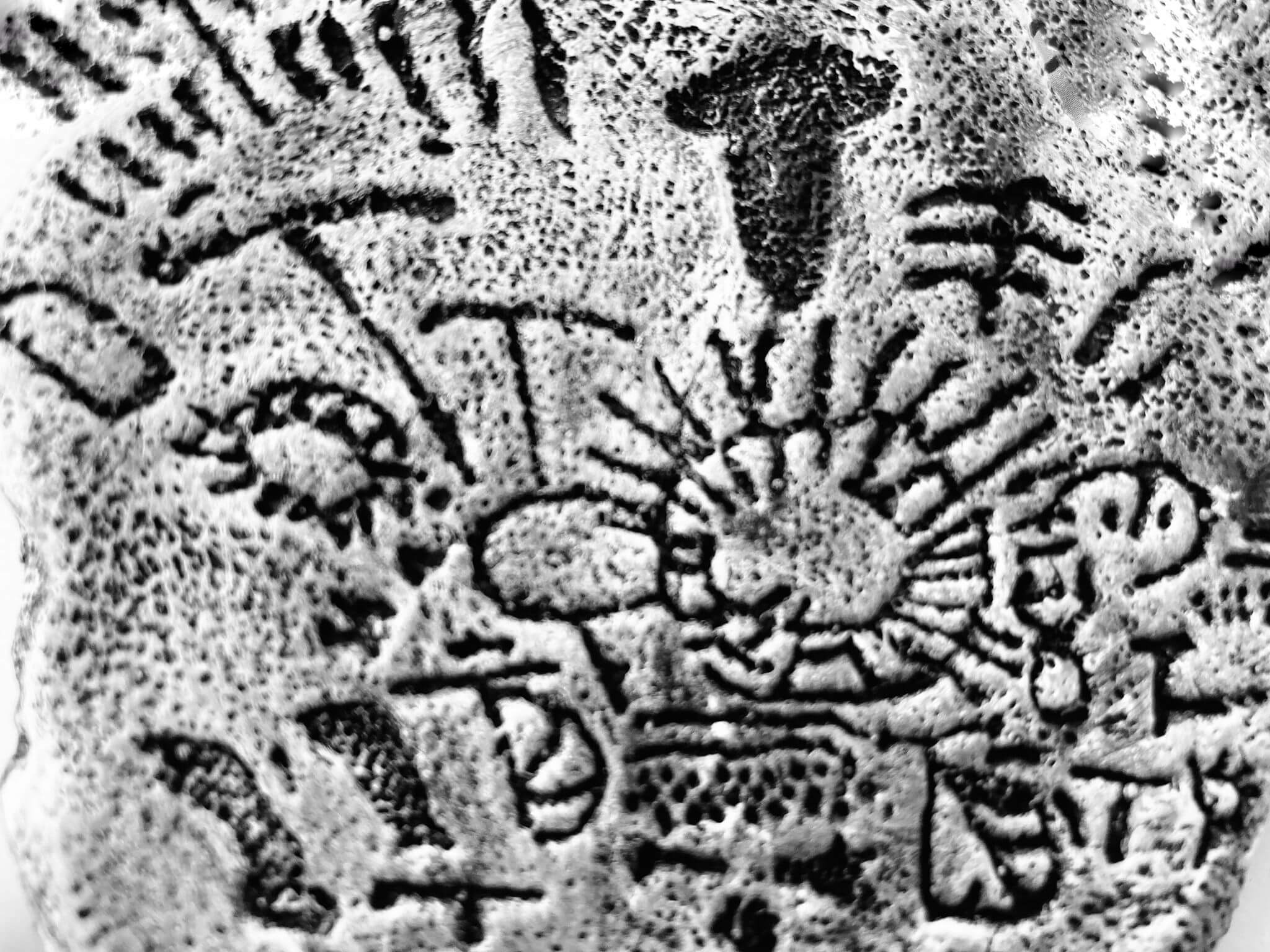
Deep within Climente II cave, where the Danube carves its path through the Iron Gates, fragments of worked bone tell a story that refuses simple narratives. At 11,000 BC, someone stood here at Cuina Turcului, crafting tools with knowledge that would echo forward through countless generations. This wasn’t just a settlement—it was a threshold between worlds.
Between stone and river, survival demanded attention → memory and adaptation. The Clisurean tradition emerging from this cave reveals continuity rather than rupture. Toolmaking choices, food strategies, and symbolic behaviors accumulated slowly, suggesting a population deeply rooted in place yet open to influence. Cuina Turcului was not isolated; it was attentive.
The Genome Revolution → Clive Bonsall’s 2017 Current Biology research shattered our understanding of Neolithic transition. Through paleogenomic analysis, he revealed that the meeting of farmers and foragers along the Danube wasn’t conquest or displacement. Instead, he documented what he termed „multi-generational mixing”—a cultural entanglement where communities merged over generations, creating something neither group had been alone. This mixing unfolded quietly. Burial practices, dietary signals, and genetic markers aligned to show continuity of people alongside transformation of practice. The Iron Gates were not a frontier of collapse but of conversation.
Ideas Travel Lighter Than Genomes Bonsall’s 2018 insight proved revolutionary: cultural entanglement happens faster than genetic mixing. Agricultural knowledge, pottery techniques, and cosmological symbols moved through observation and imitation long before ancestry shifted. Forager groups incorporated cultivation while maintaining inherited lifeways, demonstrating resilience rather than resistance.
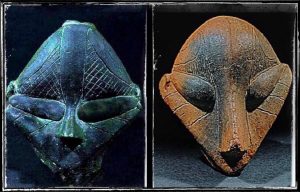
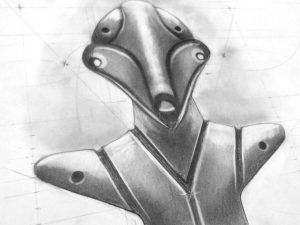
The Vinča mask convergence exemplifies this process. Across five verified fragments, shared symbolic geometry appears without evidence of mass migration. Elsewhere, from Derinkuyu to Çatalhöyük, architectural memory shows deep adaptation to hostile environments. These were not borrowed solutions but entangled ones, refined across cultures and generations.
The Pattern Emerges → What Bonsall documented wasn’t unique to the Iron Gates. Across Anatolia and the Carpathian basin, the Neolithic unfolded through gradual convergence. Cultural entanglement allowed knowledge to accumulate beyond any single group, forming shared cognitive frameworks that guided survival. This slow convergence produced what can only be described as inevitable enlightenment. Not a sudden awakening, but a cumulative realization that cooperation preserved life more effectively than isolation. Humanity did not advance by erasing difference but by weaving it.
When Rivers Remember → Today, where the Danube still presses against stone, the memory of those exchanges lingers. Cultural entanglement reframes our origins. We were not replaced. We were integrated. The story begins even earlier, in that first moment at Cuina Turcului, where someone chose cooperation over isolation—a choice that echoes still. And the story continues.
The next chapter, Cultural Entanglement → Cultural Convergence into Shared Humanity by Clive Bonsall’s latest discoveries, will explore how these early patterns matured into enduring cultural memory. Its focus returns to Cultural Entanglement, tracing convergence into cohesion. Those drawn to the quiet origins of cooperation may wish to return to the beginning, to that first attentive presence at Cuina Turcului, and read it again, slowly → Rivers of Civilizations ↓